News Summary
The renovation of Berkeley’s Memorial Stadium has sparked ongoing debates among residents as they navigate the impacts on neighborhood life. While some embrace the excitement of game days, others express concerns about increased congestion and commercialization. The complex relationship between historical landmarks and community identity is highlighted, illustrated by efforts to modernize the stadium amid protests about preserving the local environment. As Berkeley evolves, the challenges of blending tradition with necessary development remain evident.
Berkeley’s Historic Stadiums Reflect Complex Relationship with Neighborhood Changes and Renovations
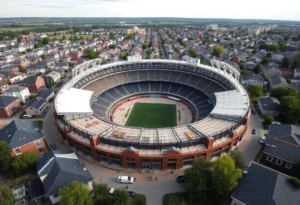
As more homeowners look to remodel or renovate their spaces, the history and ongoing evolution of neighborhoods come into play. Take, for example, Katherine Bond, who has spent a whopping 35 years living in the picturesque Panoramic Hill neighborhood of Berkeley, California. Her community is not just another quaint area; it’s surrounded by rich history, including the Memorial Stadium, part of the University of California, Berkeley, which recently underwent a significant renovation that sparked a lively debate among local residents.
Originally built in 1923, Memorial Stadium is much older than many of the homes in its vicinity and has become a focal point for discussions about balancing the charm of college sports with the need for peace in residential areas. With the stadium being situated directly on the Hayward Fault and nestled next to the historic houses of Panoramic Hill, the complexities of urban living become glaringly obvious during the bustling game days.
The Ups and Downs of Game Days
Living near such a historical landmark has its perks and downsides. Many residents enjoy the thrill of college football games, as they bring a sense of excitement and camaraderie into the community. Yet, these events can turn peaceful streets into congested avenues, leading to closures and an influx of visitors. On game days, crowds often swarm the area, bringing with them a unique local economy, as kids set up shop selling snacks and beverages to eager fans, transforming an ordinary neighborhood day into a vibrant marketplace.
However, not all residents share this enthusiasm. With the recent shifts in conference alignments, the stadium now sees even more out-of-town visitors, which has led to increased traffic congestion. Many nearby homeowners express their concerns about commercialization and have voiced apprehension about concerts being scheduled at the stadium, worrying that this might disrupt their tranquil moments.
Recurring Controversies
For residents like Doug Carlson of the Madison’s Vilas Neighborhood Association, there is a silver lining: improved communications and relationships between the university and the local community regarding upcoming events. However, the history of protests surrounding stadium renovations is not far behind. The notable “Save the Oaks” movement, which aimed to prevent the removal of a grove of oak trees for necessary seismic upgrades, lasted an arduous 21 months. Legal battles ensued, illustrating the ongoing friction between the university’s ambitions and the community’s desires.
While efforts to modernize facilities were met with enthusiasm by some, they were met with fervent resistance by others, especially those concerned about the environment. Ultimately, a hefty $445 million was spent by the university on the renovations—considerably more than the original cost of building the stadium.
Community Identity and Adaptation
Despite all the fuss and the challenges that come with life around a busy stadium, most Berkeley residents have come to embrace football season as part of their local identity. They adapt to the rhythms of the games and make peace with the occasional inconvenience it brings. Interestingly, while the renovations have markedly improved facilities for dedicated athletes, the performance on the field hasn’t quite echoed the same success, leaving sports fans feeling a mix of excitement and frustration as the program struggles to gain consistent victories.
In the end, the ongoing narrative of Memorial Stadium serves as a microcosm for the greater discussion on how large facilities interact with the fabric of the community around them. As Berkeley continues to grow and change, one thing becomes clear: the complexities of historic buildings and community ties are as intricate as they are enduring.
Deeper Dive: News & Info About This Topic
Detroit City FC Unveils Plans for New Stadium Complex
Juicy Kitchen Plans Major Renovation Following Fire Incident
Community Resilience Amid Stadium Renovations in College Towns
University of Michigan Plans Major Renovation for D.C. Facility
Beaver Stadium Set for Major $700 Million Renovation
New Cabinets To Go Showroom Opens in Austin for Renovations
Candidates Propose Housing Solutions in Detroit Mayoral Debate
New Tariffs Impact Home Remodeling Industry
University of Michigan Plans Major Office Renovation
Community Shapes Housing Renovation Plans in Corktown