News Summary
In a recent debate, Detroit’s mayoral candidates discussed critical issues including affordable housing and community safety. The candidates emphasized the urgency of addressing the city’s housing crisis, with proposals for improving living conditions and workforce development. As the primary election approaches, the focus on sustainable community growth and safety measures promises to shape Detroit’s future. Residents were encouraged to participate actively in discussions around these essential topics.
The Road to a Revitalized Detroit: Mayoral Candidates Take the Stage
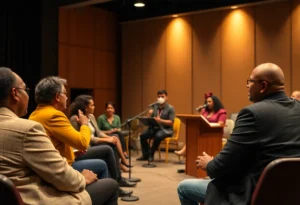
The heart of Detroit is beating strong, but can the upcoming election help it thrive even more? Recently, four enthusiastic candidates gathered for a live debate at Wayne State University’s Valade Jazz Center. With Detroit’s future hanging in the balance, these candidates laid out their visions for revitalizing the city, especially when it comes to community development and affordable housing.
Meet the Candidates
On the stage were Rev. Solomon Kinloch, former Detroit Police Chief James Craig, City Council President Mary Sheffield, and past City Council President Saunteel Jenkins. Each candidate brought their unique flair to the debate, showcasing their qualifications while expressing a shared commitment to building on the progress made in Detroit over the past decade.
Diving Deep into Affordable Housing
One major topic buzzing in the air was affordable housing. Craig notably raised the alarm, labeling the current situation as a crisis, citing a mere 1,900 housing units under development. With many families struggling to find affordable options, it’s hard to argue against his point. He proposed a push for middle-class growth through home ownership, laying out a potential pathway to enhance living conditions in the city.
Yet, Sheffield defended the over $1 billion already invested in affordable housing initiatives. Some critics, such as Kinloch and Jenkins, argued that this effort simply isn’t enough. Sadly, the recent tragedies involving two homeless children brought this issue even more to the forefront. Kinloch emphasized that no amount of investment can remedy the immediate needs being faced by real people in vulnerable situations.
Community Safety: A Top Priority
As the debate unfolded, community safety emerged as another key point of discussion. Candidates proposed diverse approaches to improve community safety. Craig drew from his experience as a police chief, advocating for increased neighborhood officers to build trust within communities.
Jenkins championed the idea of providing safe spaces for youth, especially during those critical after-school hours. The focus on public safety resources alongside community policing reflects a broader understanding of safety that includes community engagement and support.
Strengthening the Workforce
With Detroit facing an unemployment rate above 7%, candidates acknowledged the urgent need for effective workforce development. Craig recounted his efforts in negotiating with Stellantis to bring an auto plant to the city, which shows his commitment to creating job opportunities. In tandem, Sheffield stressed the importance of equipping Detroiters with the skills necessary to meet job demands in a rapidly evolving economy.
Kinloch and Jenkins shared a vision where children experience educational pathways leading directly to jobs, proposing the appointment of a chief educational officer within the first 100 days of office. Their focus on education and workforce preparedness is refreshing, as it targets long-term solutions.
Addressing Property Taxes and Construction Costs
Property taxes have been a thorny issue for Detroit residents, impacting both housing and employment prospects. Sheffield posited that the exorbitant cost of construction hampers affordable housing initiatives, while Kinloch advocated for more down payment assistance and home maintenance support for residents struggling to keep up with expenses.
Jenkins presented innovative funding strategies, including the potential for a local tax that could lessen the burden of high property taxes. The complex weave of these issues suggests that they are all interconnected, pointing to the crucial need for a comprehensive approach.
The Future Looks Bright, But How Bright?
As the candidates wrapped up their debate, the importance of maintaining Detroit’s momentum of progress became evident. With the primary election set for August 5 and the general election following on November 5, residents will be watching closely. Will they be swayed by the charisma displayed on stage, or will practical solutions take precedence in their minds?
In this revitalized landscape, where community, safety, and housing intertwine, the stage is set for an election that could reshape the future of Detroit. The stakes are high, and the time to act is now. With community involvement and a clear vision, the road to a better Detroit is just ahead.
Deeper Dive: News & Info About This Topic
Homeowners Rethink Renovations Amid Rising Mortgage Rates
Detroit Allocates $1.8 Million for Rental Property Improvements
Ann Arbor City Council Moves Forward with Housing Plans
Home Renovation Costs Surge Amid Tariff Turbulence
Home Depot’s Sales Surge Signals Renewed Interest in Home Improvement
Home Renovation Nightmares: Customers Share Their Experiences
Urgent Home Repairs Following Severe Flooding in Southwest Detroit
Detroit Faces Housing Crisis Amidst Cryptocurrency Turmoil
Impact of Mass Deportations on Michigan’s Housing Market
Additional Resources
- Click on Detroit: Detroit Mayoral Debate
- Wikipedia: Affordable housing
- Detroit Free Press: Mayoral Candidates Debate
- Google Search: Detroit Mayoral Debate
- Detroit News: Mayoral Debate Televised
- Google Scholar: Detroit Public Safety
- Crain’s Detroit Business: Mayoral Candidates Debate
- Google News: Detroit Affordable Housing